

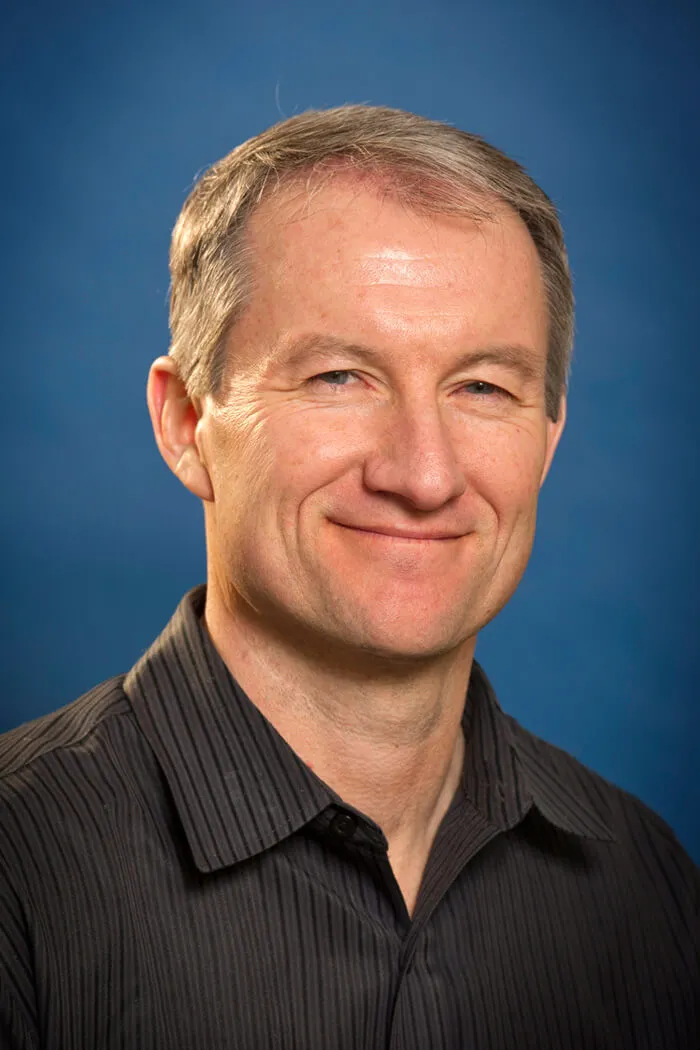
Joseph Taylor, PhD
Associate Professor, PhD Program Faculty Director Leadership, Research, and Foundations
Columbine Hall 3047
Columbine Hall 3047
Biographical Information
Dr. Joseph Taylor is an Associate Professor in the Department of Leadership, Research, and Foundations at the University of Colorado, Colorado Springs. Dr. Taylor's research centers on quantitative research methodology and knowledge accumulation considerations for education research. He teaches intermediate and advanced quantitative research methods in the Educational Leadership, Research, and Policy PhD Program.
Education
Ph.D. Science Education
The Pennsylvania State University – 2001
M.Ed. Mathematics Education
Ohio University - 1992
B.S. Physics Education
California University of Pennsylvania - 1991
Teaching
LEAD 8100 Advanced Quantitative Research and Statistics
LEAD 7100 Intermediate Quantitative Research and Statistics
LEAD 5220 Data-Driven Program Evaluation and Curriculum Assessment
LEAD 7000 Master's Research Laboratory in Leadership
Recent Publications
Cullen, R., Taylor, J. A., Nouri, M., & Laney, M. Exploring researcher-practitioner authorship collaboration in English, Foreign Language, and Mathematics education. To be published in the Journal of Practitioner Research, 2026.
Taylor, J. A., Mendez, S., Watson, K., Agbonlahor, O., Starkey, K., & Cooksey, S. Exploring the effects of institutional research intensity on engineering PhD recipients’ initial employment choices. To be published in the Journal of STEM Education: Innovations and Research, 2026.
Shear, B. R., Taylor, J. A., & Fahle, E. M. (2026). Determinants of between-school variation in student achievement: Results from US population data. Journal of Research on Educational Effectiveness, 1–25. https://doi.org/10.1080/19345747.2025.2598314
Watson, K., Taylor, J. A., & Chubb, C.S. (2026). A meta-analysis of school-based mental health interventions. Educational Research Review, 50, https://doi.org/10.1016/j.edurev.2025.100761
Taylor, J. (Winter, 2026). Applying the 5E Instructional Model in Snowsports Instruction. 32 Degrees. p.84-86.
Taylor, J. A., Miller, D. I., Michaelson, L. E., & Watson, K. (2025). Mapping the Pipeline of Intervention Evidence in Education. Educational Researcher, 55(1), 29-35. https://doi.org/10.3102/0013189X251364273
Taylor, J. A., Ibarra, D., Hixson, H.D. and Rodgers, M.A. (2025), Mapping the Landscape of K-12 Interventions That Target Students' Evaluation of Science-Related Misinformation or Disinformation. Sch Sci Math. https://doi.org/10.1111/ssm.18365
Peterson, E. S., & Taylor, J. A. (2025). A review of the controversy about ordinal outcome analysis. Educational Research and Reviews, 20(7), 114-124.
Giamellaro, M., Buxton, C., Taylor, J., Ayotte-Beaudet, J.-P., L'Heureux, K. and Beaudry, M.- C. (2025), The Landscape of Research on Contextualized Science Learning: A Bibliometric Network Review. Science Education. https://doi.org/10.1002/sce.21937
Brown, P., Bybee, R., & Taylor, J. (2024). Leading Effective Science Curriculum-Based Learning. Science and Children, 61(4), 9–11. https://doi.org/10.1080/00368148.2024.2367950
Polanin, J., Austin, M., Taylor, J., Steingut, R., Rodgers, M., & Williams, R. (2024). Effects of the 5E Instructional Model: A systematic review and meta-analysis. AERA Open. https://doi.org/10.1177/23328584241269866
Brochey-Taylor, J., & Taylor, J. A. (2024). Synthesizing validity and reliability evidence for the draw a scientist test. Educational Research and Reviews, 19(3), 44-52. https://doi.org/10.5897/ERR2023.4385
Peterson, E. S., & Taylor, J. A. (2024). Answering the call: An evaluation of the Educate to Innovate campaign’s efforts to increase and diversify science, technology, engineering, and mathematics college graduates. Policy Futures in Education, 23(1), 80-105. https://doi.org/10.1177/14782103241238823
Clayton, G., & Taylor, J., (2024). Using nearest neighbor propensity score matching to estimate the effects of dual enrollment location. In Sage Research Methods Cases Part 1. SAGE Publications, Ltd., https://doi.org/10.4135/9781529683516
Whitney, P., Kluge, M., Morris, P., & Taylor, J., & Hoban, M. (2023). Determinants of perceived health in university employees. Journal of American College Health, https://doi.org/10.1080/07448481.2023.2283731
Taylor, J. A., Bowen, G. M., Kubsch, M., Summers, R., Sezen-Barrie, A., Patrick, P., Lachapelle, C., Warfa, A., & Guzey, S. S. (2023). Crossing boundaries between research and practitioner communities: The role of research use and cross-community journal authorship. Journal of Research in Science Teaching, 1–28. https://doi.org/10.1002/tea.21914
Taylor, J.A., Bybee, R.W. (2023). Commentary: Yes! Explore Before Explain. In: Jeong, S., Bryan, L.A., Tippins, D.J., Sexton, C.M. (eds) Navigating Elementary Science Teaching and Learning. Springer Texts in Education. Springer, Cham. https://static.nsta.org/pdfs/samples/PB438X2web.pdf
Westbrook, A. Adams, C. & Taylor, J.A. (2023). Digging Deeper into Student Teacher–Scientist Partnerships for Improving Students’ Achievement and Attitudes about Scientists. The American Biology Teacher, 85 (7): 379–389. doi: https://doi.org/10.1525/abt.2023.85.7.379
Taylor, J. A. and Hedges, L. V. Toward more rapid accumulation of knowledge about what works in physics education: The role of replication, reporting practices, and meta-analysis, in The International Handbook of Physics Education Research: Special Topics, edited by M. F. Taşar and P. R. L. Heron (AIP Publishing, Melville, New York, 2023), pp. 23-1–23-20.
Taylor, J., Hanuscin, D., Lee, O., Lynch, S., Stuhlsatz, M., & Talbot, R. Sources and consequences of teacher attrition in large-scale impact studies. Research in Education. https://doi.org/10.1177/00345237231155835
Polanin, J., Zhang, Q., Taylor, J., Williams, R., Joshi, M., & Burr, L. Evidence gap maps in education research. Journal of Research on Educational Effectiveness. https://doi.org/10.1080/19345747.2022.2139312
Taylor, J. A., Polanin, J. R., Kowalski, S. M., Wilson, C. D., & Stuhlsatz, M. A. (2022). Addressing test fairness in education research: A process for quantifying the alignment between outcome measures and education interventions. Social Sciences & Humanities Open, 6(1), https://doi.org/10.1016/j.ssaho.2022.100312
LaFave, A., Taylor, J.A., Barter, A., & Jacobs, A. (2022). Student engagement on the National Assessment of Educational Progress (NAEP): A systematic review and meta-analysis of extant research. Educational Assessment. https://doi.org/10.1080/10627197.2022.2043151
Taylor, J. A., Adams, C. T., Westbrook, A. L., Creasap Gee, J., Spybrook, J. K., Kowalski, S. M., ... & Bloom, M. (2021). The effect of a student–teacher–scientist partnership program on high school students' science achievement and attitudes about scientists. Journal of Research in Science Teaching. https://doi-org.libproxy.uccs.edu/10.1002/tea.21733
Taylor, J., Pigott, T., & Williams, R. (2021). Promoting knowledge accumulation about intervention effects: Exploring strategies for standardizing statistical approaches and effect size reporting. Educational Researcher. https://doi.org/10.3102/0013189X211051319
Taylor, J. A., Davis, E., & Michaelson, L. E. (2021). Considerations for evidence frameworks in education research. Review of Research in Education, 45(1), 101-128.
Eberbach, C., Hmelo‐Silver, C. E., Jordan, R., Taylor, J., & Hunter, R. (2021). Multidimensional Trajectories for understanding ecosystems. Science Education, 105, doi:10.1002/sce.21613
Taylor, J., Banilower, E., & Clayton, G. (2020). National trends in the formal content preparation of US science teachers: Implications of out-of-field teaching for student outcomes. Journal of Science Teacher Education, 31(7), 768-779.
Westine, C. D., Unlu, F., Taylor, J., Spybrook, J., Zhang, Q., & Anderson, B. (2020). Design Parameter Values for Impact Evaluations of Science and Mathematics Interventions Involving Teacher Outcomes. Journal of Research on Educational Effectiveness, 13(4).
Kowalski, S. M., Taylor, J. A., Askinas, K. M., Wang, Q., Zhang, Q., Maddix, W. P., & Tipton, E. (2020). Examining factors contributing to variation in effect size estimates of teacher outcomes from studies of science teacher professional development. Journal of Research on Educational Effectiveness, 13(3), 430-458.
Taylor, J. A., & West, B. (2019). Estimating Teacher Attrition for Impact Study Design. Educational Researcher. doi: https://doi.org/10.3102/0013189X19880550
Taylor, J. A., Stuhlsatz, A. M., & Bintz, J. (2019). The Effect of a Leadership Development Program for High School Science Reform on Student Achievement in Science: A Retrospective Quasi-Experiment. The Science Educator, 27(1), 1-17.
Taylor, J. A., Kowalski, S. M., Polanin, J. R., Askinas, K., Stuhlsatz, M. A. M., Wilson, C. D.,& Wilson, S. J. (2018). Investigating Science Education Effect Sizes: Implications for Power Analyses and Programmatic Decisions. AERA Open. https://doi.org/10.117/2332858418791991
Roth, K. J., Wilson, C. D., Taylor, J. A., Stuhlsatz, M. A. M., & Hvidsten, C. (2018). Comparing the Effects of Analysis-of-Practice and Content-Based Professional Development on Teacher and Student Outcomes in Science. American Educational Research Journal. https://doi.org/10.3102/000283121881475